
The Salish People & Lewis and Clark Expedition
Department Director: Ɫaʔkat-Sadie Peone-Stops
Phone: (406) 745-4572
Hours: Mon-Thurs 7:00am – 5:30pm
Follow Us:
The Salish People and the Lewis and Clark Expedition
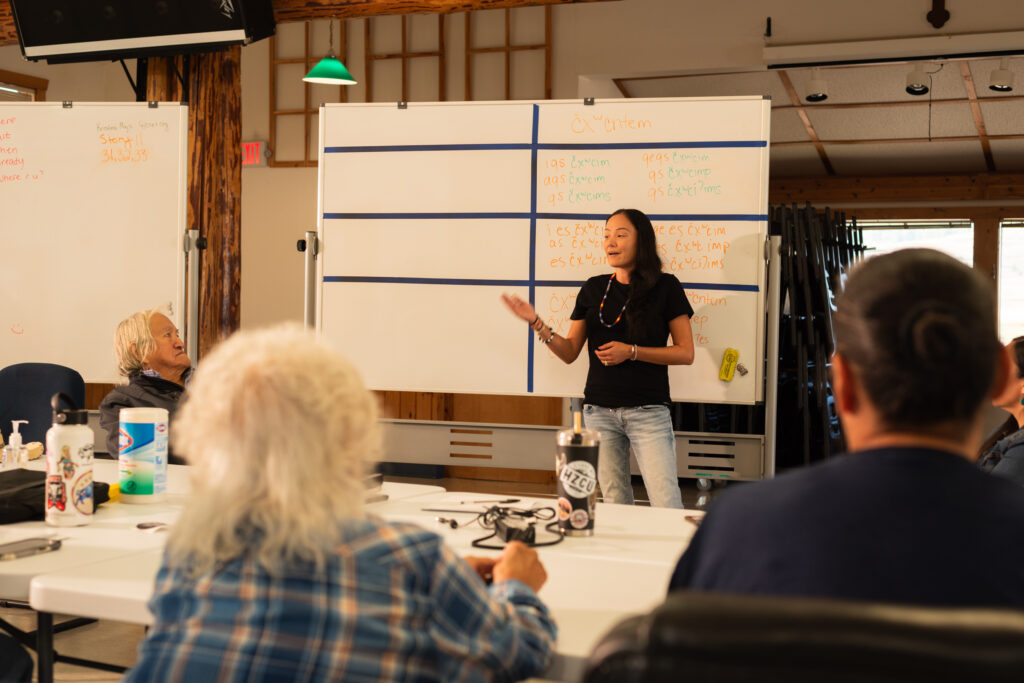
Our language stands at the heart of who we are as Séliš and Ql̓ispé people. It carries the wisdom, power, and beauty of culture and traditional way of life. And today, our language is critically endangered, with fewer than fifteen fluent Séliš and Ql̓ispé speakers still living. We are in a race against time to ensure that our language survives. The SQCC is charged with coordinating Séliš-Ql̓ispé language efforts on the Flathead Reservation. We work with and support teachers and learners throughout all schools and communities. We have developed many materials to help learners at all levels, including books, websites, apps, posters, pamphlets, CDs, and boxed card sets. The SQCC has also developed a rigorous, three-tiered language curriculum, and an intensive Salish immersion program with 10-20 full-time language apprentices. Those who complete the program acquire a level of fluency that enables them to learn the higher levels of the language from our elders.
Listen to the Voices of Salish and Pend d’Oreille Tribal Elders
At the heart of The Salish People and the Lewis and Clark Expedition are the elders’ oral histories, recorded in Salish and presented in the book in a bilingual, Salish-English format. Now, as you read the text, you can also listen to the elders’ voices from the Salish-Pend d’Oreille Culture Committee’s original recordings.
Book Details:
The Salish People and the Lewis and Clark Expedition by the Salish-Pend d’Oreille Culture Committee and Elders Advisory Council, University of Nebraska Press (2003 and 2008)
| Audio | Salish Passage | English Passage |
|---|---|---|
| Dedication, Page 5 — read by Shirley Trahan | ||
| Esq̓ey̓ y̓e q̓ey̓min x̣͏ʷl̓ qe es puteʔm qe x̣͏ʷl̓čmusšn u y̓etɫx̣͏ʷa sqlqélix͏ʷ u y̓e putiʔ c̓n̓en̓n̓es. | This book is written because we respect our ancestors and the people here today and the generations yet to come. |
|
| Pages 2-6 — Mitch Smallsalmon | ||
| Ɫu tsq̓si… neɫi l es milk̓͏ʷ y̓e st̓úlix͏ʷ u es t̓uk̓͏ʷ ɫu maliyémistis ɫu sqélix͏ʷ… X̣est! X̣est es ay̓ew̓ti, x̣est es p̓ox̣͏ʷtil̓ši ɫu sx̣͏ʷsix͏ʷlts ɫu tsq̓si sqélix͏ʷ. I x̣͏ʷuk̓͏ʷ y̓e st̓ulix͏ʷ, i x̣͏ʷuk̓͏ʷ y̓e air, y̓e nwíst, esyaʔ u x̣e. | A long time ago.… all over this land the people's medicine was put here… It was good! Their home life was good, they were growing up in a good way, the children of the long-ago people. The land was clean, the air was clean, everything was good. |
|
| Pages 12-14 — Pete Beaverhead | ||
| K͏ʷem̓t ɫiʔé iʔs meyeʔm, kʷem̓t ɫu k̓͏ʷɫpaʔx̣nten, čn nté č̓ tl̓ čeɫl nq̓͏ʷoqey smx̣͏ʷop u č̓ msɫnq̓͏ʷoqey cič̓ciʔ. U npƛ̓mú ec̓x̣ey ɫu i tmi. Ɫu iqs cmeyyeʔ ɫu in qnqeneʔ, i slsileʔ, i sx̣px̣épiyeʔ, in lilaw̓iyeʔs, t̓pt̓úpiyeʔs ɫu es nmicinms…. | So this, that I am telling, when I thought about it, I think it is from three hundred snows ago to four hundred snows ago, and even beyond that time. And it's the end, like of what is known. What I am going to tell is what was passed on to me by my paternal grandmothers, my maternal grandfathers, and my paternal grandfathers, by their great-great-grandparents, their great-grandparents telling them... |
|
| Pages 15 — Mitch Smallsalmon | ||
| K͏ʷem̓t l šey̓ u es čšín, u ɫu x̣͏ʷa l čen̓ u ax̣ey u ɫu es šʔí suyá cx͏ʷuy, ɫu es custm Columbus. K͏ʷem̓t ɫu cnt̓ešlš, u wičis y̓e st̓úlix͏ʷ, t̓ipncú ɫu tl̓ ƛ̓iyés u nšt̓ulex͏ʷis ɫu scčacé. C̓x̣ey es lemti, es lemti tix͏ʷ st̓úlix͏ʷ. U wičis, we wičis y̓e sqélix͏ʷ, tutupiyew̓t, es tʔacc̓x̣. K͏ʷem̓t ta es misten, ta ciqs cu ɫu, ɫu l šey̓ u ec̓x̣ey̓ ɫu sc̓k̓͏ʷɫpaʔax̣s ɫu suyá. | Then that’s when people said the first whiteman here came from what you call Columbus. When he came across and saw this land, when he got off his ship, he put his flag in the ground. It's like he was glad, glad because he obtained land. He did see the Indians standing in groups all staring at him, but I’m not going to say what was on their minds — I mean, about the white people. |
|
| Pages 20 — Mitch Smallsalmon (read by Shirley Trahan) | ||
| Neɫi ɫu tsq̓si ɫiʔe sqélix͏ʷ ɫu es x̣͏ʷlx̣ʷílt l milk̓͏ʷ u esnpyélsi… Ta ma l šey̓ u ec̓x̣ey ɫu sqélix͏ʷ ɫu tsq̓si. Esyaʔ ɫiʔe x̣͏ʷix͏ʷey̓uɫ — x̣͏ʷʔit ɫu x̣͏ʷix͏ʷey̓uɫ. X̣͏ʷʔit ɫu tʔe stem̓ u ɫiʔe st̓úlix͏ʷ i x̣est u ɫiʔe sx̣aap i x̣͏ʷuk̓͏ʷ. | Of course, long ago the Indian people who were living were happy all the time… You know, that’s how Indians were a long time ago. All these animals — there were many animals. Plenty of everything, and this land was good. And the air here was clean. |
|
| Pages 23 — Pete Woodcock | ||
| N̓e tma ɫu tsq̓si l še u ec̓x̣ey ɫu sqélix͏ʷ. Y̓e sp̓eƛ̓m, y̓e sx̣͏ʷeʔli, y̓e seč ci esyaʔ — u es k̓͏ʷl tk̓͏ʷneʔi ɫu sqélix͏ʷ ɫu x̣͏ʷl̓ n̓e ʔistč. | You know, a long time ago, that's the way the Indian people were. The bitterroot, the camas, wild onion, and everything else — the Indian people are gathering and storing for the winter months ahead. |
|
| Pages 23 — Pete Beaverhead | ||
| K͏ʷem̓t n̓e ci eɫ nk̓͏ʷu spq̓niʔ še ƛ̓e es t̓ix͏ʷllm, tʔe stem̓ ɫu eɫ es k̓͏ʷul̓lm. Šey̓ ɫu c̓x̣ey tʔes šlčmncuti y̓e sp̓iqaɫq, u y̓e scx̣ect, u y̓e sqq̓m̓e, u y̓e sčɫip. L milk̓͏ʷ u es q̓͏ʷapmi, l milk̓͏ʷ u es tix͏ʷm. | Then the following month, they do something different, they are working on something else. Things are rotating, going in a circle, the berries or things you pick, the roots and things you dig, and the fishing, and the hunting. They are constantly moving, gathering things all the time. |
|
| Pages 25 — Pete Woodcock | ||
| Ɫu t q͏ʷoyʔe c̓x̣ey cwičtn ɫu ilmilk̓͏ʷ ɫu isnk̓͏ʷsqélix͏ʷ, tma ɫiʔe qepc x̣͏ʷa put stem̓ ɫu spq̓niʔ, še tix͏ʷntm ɫu qs cʔiʔiɫis. Ɫu tin p̓x̣͏ʷp̓x̣͏ʷot x̣eʔect ɫu t sp̓eƛ̓m… Wis x̣eʔect ɫu t sp̓eƛ̓m k͏ʷem̓t čtax̣͏ʷlle x̣eʔect ɫu t, ɫu t sx̣͏ʷeʔli… seč… qɫ nmeƛ̓mn ɫu l sq͏ʷl̓eʔeps. K͏ʷem̓t tiʔix͏ʷis ɫiʔe qʔes custm šaw̓tmqn, y̓e Snč̓l̓e q̓͏ʷomqeys. | It's like I always saw my fellow Indian people, during some month in the spring, gathering their food. My parents would dig bitterroot… After they were done digging bitterroot then they would start to dig camas… onions… to be a mixture in their camas baking. Then they would pick what we call šaw̓tmqn (tree moss), this Coyote’s hair. |
|
| Pages 26 — Mose Chouteh | ||
| Ɫu tsq̓síp, ɫu es custm swiqɫc̓eʔ — ɫu l sʔánɫq — put c̓ʔék̓͏ʷ ɫu x̣͏ʷy̓é, še im̓š ɫu qe p̓x̣ʷp̓x̣ʷot t čɫčewšlš, es tixʷcní t q̓ʷeyq̓ʷay. Še put č̓eyʔiʔilš, še eɫ ct̓kʷk̓͏ʷelp. Eɫ im̓š — es custm es ʔem̓šl̓wi. Put qepc, še eɫ ct̓kʷk̓͏ʷelp. Ɫu qe p̓x̣ʷp̓x̣ʷot, ɫu qe x̣ʷlč̓musšn. | A long time ago, what is called swiqɫc̓eʔ — the summer hunt — just when the wild roses bloom, our parents and elders moved to the plains country, to harvest buffalo. Towards fall, they would move back home. Then they move back again — this is called es ʔem̓šl̓wi — moving from camp to camp. When spring came, they moved back home again. These were our parents, our ancestors. |
|
| Pages 36 — Pete Beaverhead | ||
| Tl̓ šey̓ u x̣eyɫ xʷeʔúlexʷ ɫu uɫ ʔamtqné, uɫ Snq̓ʷeymncú, uɫ Snk̓ʷɫxʷexʷem̓i. L še u xʷʔit sck̓ʷulsc ɫu Snč̓lé. Kʷem̓t t še u šiy̓ú-u-u-u-u-u ncčn̓šncu u c̓spnúʔuys ɫu kʷtkʷtu-u-unt xʷixʷey̓úɫ. | From here there are many places, like ʔAmtqné, and Snq̓ʷeymncú, and Snk̓ʷɫxʷexʷem̓i. This is where Coyote did many things. Coyote we-e-e-e-e-ent through there, going all around and getting rid of all the hu-u-uge animals. |
|
| Page 141 — Dolly Linsebigler | ||
| Čn nte n̓em x̣e y̓e q̓ey̓min ɫuqs wiʔičms ɫu t, ɫu t qe sx͏ʷsix͏ʷlt ɫu t esyaʔ; qs mipnuʔunms l čen̓ u ec̓x̣ey es x̣͏ʷuyi ɫu suya, suyapi. U čn nte n̓em x̣e y̓e q̓ey̓min ɫuqs wiʔičms ɫu itox̣͏ʷ. U nex͏ʷ ɫu t qe sx͏ʷsix͏ʷlt qs mipnuʔunms esyaʔ ɫu sck̓͏ʷul̓s ɫu qe p̓x̣͏ʷp̓x̣͏ʷot ɫu qe x̣͏ʷlč̓musšn. U čnte n̓em x̣e ɫu x̣͏ʷl̓ qe sx͏ʷsix͏ʷlt. Iše čnte x̣͏ʷʔit k̓͏ʷmiʔ mipnuʔuys ɫu t qe sx͏ʷsix͏ʷlt ɫu qe nk̓͏ʷul̓mn ɫu esyaʔ. Tl̓ šey̓ m nex͏ʷ mipnuʔuys ɫu t sx͏ʷsix͏ʷlts n̓e t čen̓ tix͏ʷ sx͏ʷsix͏ʷlt ɫu itox̣͏ʷ ɫu scx̣͏ʷlx͏ʷilts ɫu qe p̓x̣͏ʷp̓x̣͏ʷot qe Séliš. | I think it will be good for all of our children to see this book; and all of us to learn how the white people did things. I also think it will be good for them to see in this book the truth. And then the children will learn all of the ways of our old people, our ancestors. I hope our children will learn more about all of our ways. Then from that, our children’s children, when they have children, they will learn the truth about the way the Salish lived, our old people. |
|
| Page 144 - 148 — Pat Pierre | ||
| X͏ʷʔit ɫu tsq̓sip ɫu qe nk̓͏ʷul̓mn ɫu qe sqélix͏ʷ c̓x̣ey es nɫpɫetptmm… x̣͏ʷu-u-uy u c̓x̣ey, c̓x̣ey x̣͏ʷq̓͏ʷoʔscut ɫu šey̓. C̓x̣ey č̓e ič̓ tam u q̓͏ʷo es tax̣͏ʷllus ɫu qe nk̓͏ʷul̓mn. | Many of the ways of our people of long ago, it is like they are being forgotten. . . . Those ways have, like, like separated from us as time went on. It is like our ways is going the wrong way. |